

 The armadillo is a slow but methodical animal that goes about its business unabated by much of anything. With few predators to stop them, the armadillo will continue to work over the lawn and landscape. Signs of damage to look for are small baseball and softball sized holes in the mulch and lawn. The holes will be about 2-3 inches deep and circular to oval in shape. There is not much you can do to prevent armadillos from being on your property short of fencing in the area which in most cases is cost ineffective.
All Things Wild can help you with your Armadillo Removal! - Contact Us Today!
We specialize in Wildlife Removal and Animal Removal in Mt. Juliet, Lebanon, Donelson, Nashville & Middle Tennessee.
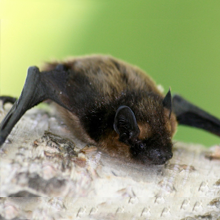 Bats most commonly roost in caves, which provide a safe, enclosed area for them to sleep and raise their young. But they don’t always utilize a cave.
 Opossums are most known for their rat like appearance of their long slinder snout, pointy ears, and hairless tail. Opossums have white to shaded gray fur, and have the most teeth of any mammal at 50. They can weigh up to 10 – 20 lbs. Opossums are found throughout the United States, and are even problems internationally. Opossums are omnivorous, eating both plant and animal foods, and are opportunistic feeders. Mating begins December – June, dependent on geographical area, with 5 – 20 young being born starting in March. Opossums are nocturnal, but in a residential setting can make a daytime appearance if food is readily available.
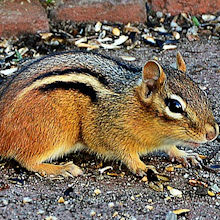 When discouraging chipmunks hasn’t worked, it’s time to consider trapping them. Humane trapping and relocating is most effective when you are only dealing with one or two chipmunks. It is a very time consuming task to live trap a forest full of little rodents and relocate them far enough away so that they don’t return. If you choose to live trap, a wire mesh trap with a pressure plate trigger will be the most effective tool to use. Chipmunks are very food-driven. You will not have to leave the trap pre-baited for a few days as with some other animals. Just bait and set, and the next day you will likely have a catch.
 There are many things that can go wrong in a crawlspace. Moisture from plumbing or structural leaks, access points for pests that lead to access in the main living area, spider nesting harborage, heat, humidity and energy loss from disconnected air duct vents, wood to earth contact that attracts termites and carpenter ants, rodent nesting and feces.Not only can all these issues be problematic for the health of the home but because the air in the crawlspace comes into the main living space, they can also cause problems for those that inhabit the home.
 While skunks are an important source of insect control, most human and skunk interactions are negative. Skunks carry various diseases harmful to both humans and domesticated animals, such as rabies, tularemia, and distemper. Additionally, they can host disease-causing parasites such as fleas, mites, ticks, and tapeworms.
 You know pests can get into your house through a variety of means, such as small cracks in the foundation or tiny holes in the wall, but did you know one point of entry could include your dryer vent? It makes sense — a dryer vent essentially leaves a hole in the side of your house that leads right into your home, creating a quick and easy pathway for pests trying to escape harsh outdoor weather conditions. We can help with dryer vent cleanouts, remove and replace dryer vents, A/C sealups, starling stopper installation, full home pest proofing.
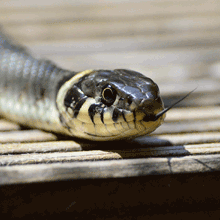 Snakes inside homes and offices can create an intense fear for some people, these snakes should not be harmed, and may be there because of an unknown rodent problem. Homes with snakes present should be checked for the presents of rodents. Once snakes are removed, entry point(s) should be located and sealed, as not to allow snakes and rodents to enter into the building. A rat or mouse problem (if present) must also be addressed. Venomous snakes can be removed and snake pleasing habitats can be modified, which will make your property less attractive to snakes. Examples: Removal of wood and rock piles, ivy, reduce food (typically rodents) sources. In addition, a specially designed repellent can be applied that helps keep snakes out of the area.
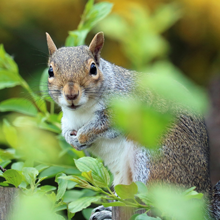 Squirrels love to live in attics. They also love to chew, and will chew on houses or wires, ducts, pipes once inside an attic. People don't like the noises of squirrels running about above the ceiling or in the eaves, but it's really the chewing that's a problem. If squirrels chew on electrical wires in an attic, it can create a real potential fire hazard. Squirrels also bring in nesting material and leave urine and feces in an attic. They also commonly nest in a chimney, where they can sometimes get stuck and frantically scratch, or sometimes even get into the fireplace and inside the house.
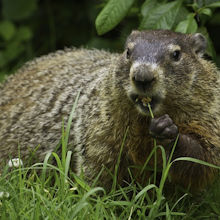 Groundhogs can be a big problem on your property or farm as they can burrow into the ground and destroy gardens and crops, and can create a hazard for livestock and people. They can can chew their way under homes and live under foundations. A groundhog can cause a lot of damage to the ground structure of a yard, pasture, or garden. It’s best to deal with the situation as soon as possible. If you notice burrows on your property or have seen a ground hog, contact us and we’ll take care of the problem quickly.
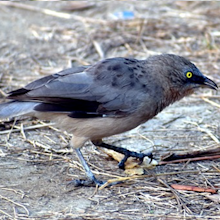 Obnoxious and destructive, starlings can cause considerable damage to both people and property. Given the large size of their flocks, damage to fields is typically considerable and includes the uprooting of new plants and the eating of seeds. Starlings also gather at feeding troughs where they eat and contaminate the food and water. They enter buildings to nest and roost, leaving masses of droppings that corrode building facades and that can also contain various bacterial pathogens. Diseases transferred by starling droppings include blastomycosis, histoplasmosis, and salmonella.
 Moles live underground and burrow through the earth, creating tunnels with their cylindrical bodies and powerful front claws. Moles create a complex network of interconnected chambers or tunnels close to the surface to the ground. Contrary to popular belief, moles do not eat roots or flower bulbs. They mainly eat worms and insect larvae. The major problem with moles are the tunnels they create. These tunnels can ruin your nicely landscaped lawns and manicured gardens. A mole problem can be especially frustrating for homeowners.

